en
en
 Tiếng Việt
1. What is teeth whitening?
Teeth whitening is a method that uses oxidizing compounds and energy from laser light to create a reaction on the tooth surface, breaking down the dentin-colored molecular chains, resulting in whiter and brighter teeth.
2. Should you whiten your teeth? Advantages
Whether or not you should whiten your teeth depends on your oral health, aesthetic goals, and the method you choose. According to experts at MIA Dental Clinic, teeth whitening should be performed at a reputable dental clinic to avoid tooth sensitivity, and it’s especially important not to overuse whitening products as they can weaken tooth enamel.
Below are the pros and cons of teeth whitening so you can decide whether or not to proceed.
2.1. Advantages of teeth whitening
- Rapid aesthetic improvement: In just one hour at the dental clinic, teeth can be at least 1.5 to 4 shades brighter than before, resulting in a more confident, radiant, and youthful smile. This is especially effective for people with discolored teeth due to food or tobacco.
- Fast, minimally invasive procedure: Teeth whitening at the dental clinic typically takes 45-60 minutes, does not damage tooth enamel, and does not cause bleeding.
- Can be done at home: With teeth whitening methods using trays or whitening kits, customers can use them at home, giving them more control over their time and saving money, but the results will not be as good as at a dental clinic.
- The results can last a long time: With proper care (avoiding colored foods, maintaining good oral hygiene), whiter teeth can last from 1–3 years.
2.2. Disadvantages of teeth whitening
- Temporary sensitivity: After teeth whitening, teeth may experience sensitivity for 24-72 hours, especially in people with weak teeth or those who consume very hot or cold foods. This is because the whitening agent affects the enamel and dentin, temporarily increasing sensitivity.
- Teeth heavily stained by tetracycline or fluoride may not achieve optimal whitening results, only lightening them by 1-2 shades compared to healthy teeth.
- Risk of gum and tissue irritation if teeth are not whitened properly at home.
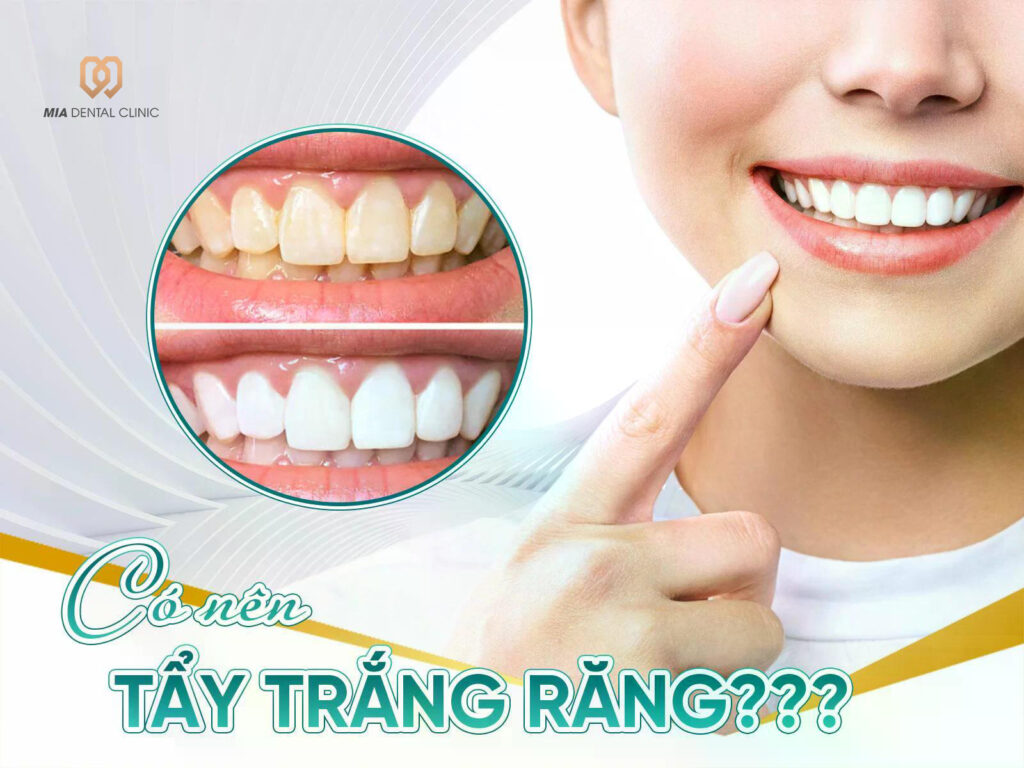
3. When and where teeth whitening is recommended and not recommended.
Teeth whitening isn’t suitable for everyone. Before undergoing the procedure, you should thoroughly research the method and the dental clinic performing it to ensure safety and achieve the best aesthetic results.
| Criteria | You should whiten your teeth. | DO NOT whiten your teeth. |
| Age | After the age of 16, tooth enamel and pulp are fully developed. | Before the age of 16, the enamel and bone marrow are not yet fully developed. |
| Dental condition | Healthy teeth, free from cavities, enamel erosion, and cracks. | Tooth decay, enamel erosion, cracks |
| Gum condition | Healthy gums, no gingivitis, no periodontitis. | Untreated gingivitis, periodontitis, and pulpitis. |
| Causes of discoloration | Food and drinks (coffee, tea, wine, etc.), tobacco, aging, post-braces removal. | Severe discoloration due to tetracycline or fluoride (bleach is less effective). |
| Condition of the prosthetic material | There are no fillings, crowns, or veneers in the area to be treated. | There are fillings, porcelain crowns, and veneers – they don’t change color when bleached, but they are prone to color mismatch. |
| Overall health | Healthy person, not allergic to bleach. | Pregnant or breastfeeding women; people with peroxide allergies. |
| Sensitivity level | Normal teeth or only slightly sensitive teeth. | Overly sensitive teeth, prone to persistent pain and discomfort. |
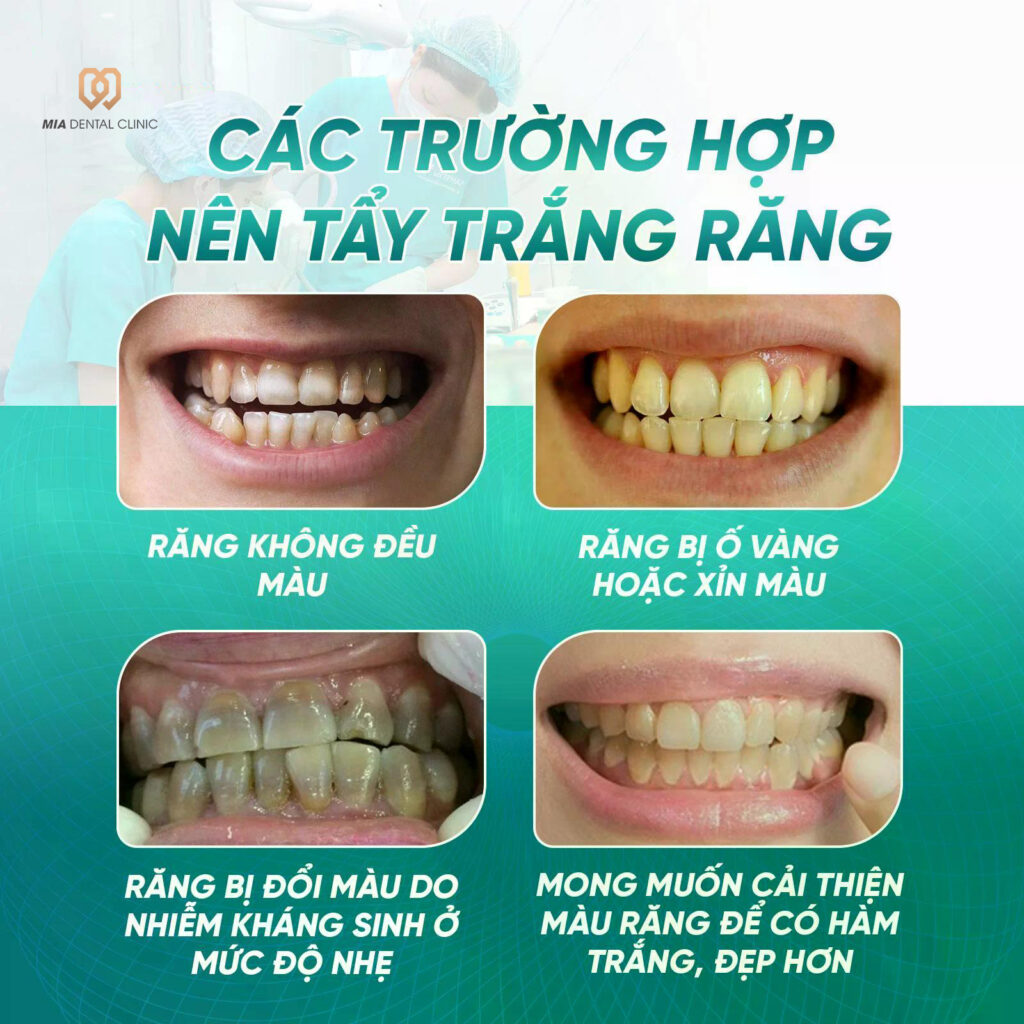
3.1. When is teeth whitening recommended?
The dentist will assess each patient’s dental condition to determine whether teeth whitening is necessary. However, teeth whitening is generally recommended when patients experience the following conditions:
- Uneven tooth color
- Yellow or discolored teeth
- Mild tooth discoloration due to antibiotic use
- Desire to improve tooth color for a whiter, more beautiful smile
- Teeth discoloration after dental treatment: after braces removal, after teeth cleaning
3.2. Cases where teeth whitening is not recommended.
In most cases, when requested, the dentist will examine the patient and proceed with teeth whitening. However, if you fall into any of the following categories, you should absolutely not whiten your teeth to avoid unfortunate consequences:
- Pregnant or breastfeeding women
- Individuals currently suffering from dental problems such as tooth erosion, periodontitis, or cavities
- Individuals with a history of allergies to ingredients in teeth whitening products
- Individuals with excessively sensitive teeth or prolonged tooth sensitivity
- Children under 16 years of age
- Elderly individuals and those with other chronic diseases
If you fall into one of the above categories, you should address the issue first before proceeding with teeth whitening to ensure effectiveness and avoid unwanted health problems.

4. Effective at-home teeth whitening methods
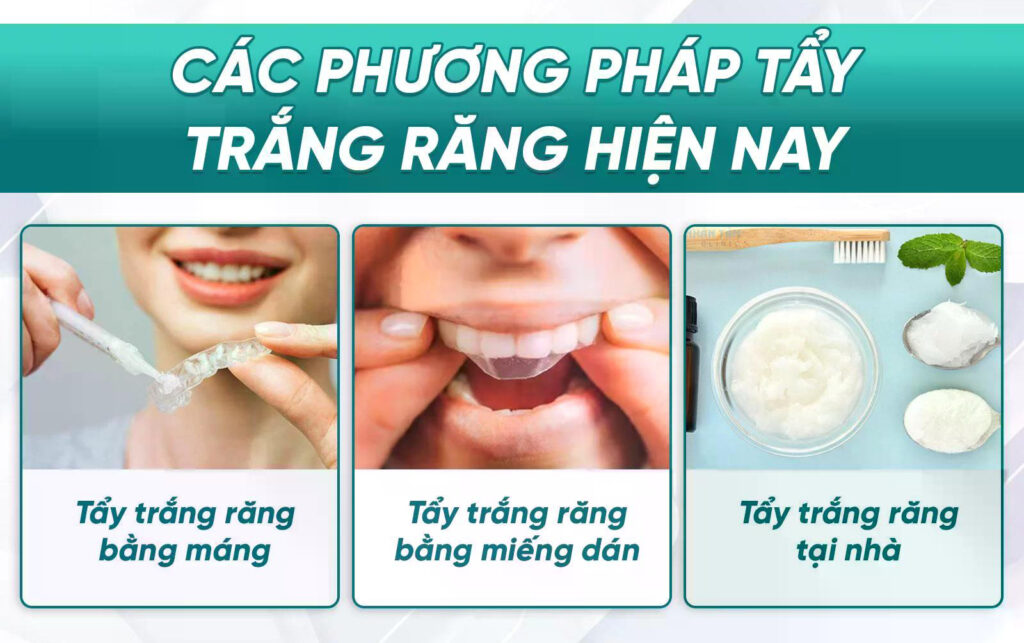
Currently, there are many teeth whitening methods, ranging from simple to complex, and some you can even do at home. Let’s explore the advantages and disadvantages of each method below:
At-home teeth whitening involves using natural methods or whitening strips to brighten teeth. Specifically:
4.1. Teeth whitening method using trays
This method uses custom-fitted trays containing whitening gel to prevent saliva from diluting the gel.
Operating principle
- The dentist takes an impression of the entire set of teeth and creates a mold made of plastic that fits snugly over the teeth.
- The whitening gel is pumped into the tray and worn for a specified period. The gel from the tray will act on the tooth surface, gradually whitening the teeth.
- The splint should be worn for 2 hours each day, and can be worn overnight.
| Advantage | Disadvantages |
| Popular, easy to use, and convenient for daily life, it can be done at home without needing to go to the dentist. It saves time, and you can still do other normal activities while wearing the trays. It is also more cost-effective than professional teeth whitening at the dentist. | This method is only suitable for people with mild tooth staining. For cases of long-term staining or discoloration, the results are slow and almost negligible. It can erode tooth enamel if using whitening products of unknown origin, in excessive doses, or without following a dentist’s instructions. It increases the risk of gingivitis if used for too long, in excessive doses, or if the mouthguard is not the correct size for the jaw. |
4.2. Teeth whitening method using strips
This involves using clear whitening strips containing substances such as carbamide peroxide or hydrogen peroxide, which are applied directly to the surface of the teeth.
Operating principle:
- Apply the patch directly to the tooth surface for 30-60 minutes.
- The whitening agents in the strips act directly on the surface of the teeth, removing the yellowish discoloration and restoring a bright white smile.
| Advantage | Disadvantages |
| The process is simple, can be done at home, and allows you to do other things while doing other tasks. It saves time because you can schedule the application whenever you want. It makes teeth naturally whiter. It is cheaper than teeth whitening trays or professional whitening at a dental clinic. | It is difficult to accurately determine the concentration of whitening agents, which can pose a potential risk to tooth enamel and gums. It can irritate the gums and soft tissues in the oral cavity due to the strips’ direct contact with the gums. The effect is slow; consistent use for 10-15 days is required to see noticeable changes. The effect is not long-lasting, and teeth are prone to staining again after only 3-6 months. It can lead to uneven tooth color due to the difficulty in applying the strips evenly across the tooth surface. |
4.3. Teeth whitening using a kit
Teeth whitening kits typically include whitening gel, trays, and a light, simulating the professional whitening process at a dental clinic. You should use these kits according to your dentist’s instructions or advice to achieve the best results and avoid unwanted side effects.
Advantage:
- Convenience and variety: Many at-home teeth whitening products containing peroxide gel are available on the market, with various options ranging from gels placed in dental molds to gels used with whitening glasses or devices.
- Suitable for sensitive teeth or as a treatment aid: This method is suitable for clients with sensitive oral tissues or can be prescribed to help speed up the whitening process after completing a pre-planned teeth whitening treatment by the dentist.
- Easy to use: Using the specialized kit is quite simple; you just attach the whitening tray to the lamp, apply whitening gel to the tray, place the tray in your mouth, turn on the lamp for the specified time, and then rinse your mouth thoroughly.
Disadvantages:
- Suboptimal effectiveness: The whitening effect of at-home teeth whitening trays may not be as optimal as methods used at a dental clinic.
- Potential oral health risks: At-home teeth whitening methods, including kits, pose potential oral health risks such as enamel erosion and damage if not used correctly.
4.4. Natural teeth whitening methods
These methods utilize natural ingredients or folk remedies and tips such as baking soda, activated charcoal, coconut oil, etc.
Operating principle:
- Teeth whitening ingredients are all derived from natural sources such as activated charcoal, coconut oil, baking soda, etc.
- Combine these ingredients with toothpaste or apply directly to the surface of your teeth, then rinse and clean.
- Natural whitening agents work on the tooth surface to remove plaque and discoloration.
| Advantage | Disadvantages |
| Simple to use, can be done at home. Natural ingredients, easy to find, suitable for people allergic to whitening agents. Can be used for children as it contains no harmful chemicals. The cheapest method of teeth whitening due to readily available ingredients. | The whitening effect is not very high, takes a long time, and is only suitable for cases of mild tooth staining or discoloration. Incorrect use can cause damage to the gums and erode tooth enamel. |
5. Teeth whitening methods at the dental clinic
Teeth whitening at a dental clinic is a method of whitening performed directly at dental facilities and clinics. Dentists will combine the use of whitening agents or technology to clean and brighten the tooth surface.
Advantage
- You will receive thorough examination and consultation from a team of highly qualified doctors.
- It’s more effective than whitening your teeth at home.
- The procedure doesn’t take much time, only 1-2 hours with the assistance of a doctor and specialized whitening equipment.
- Teeth whitening results in a uniform color because the procedure is performed by a team of experienced and professional dentists.
- Teeth retain their color longer compared to at-home teeth whitening, potentially lasting from 3 to 5 years.
Disadvantages
- The cost is higher compared to whitening your teeth at home.
- Teeth can still become stained or discolored again if proper dental care is not maintained.
Compared to at-home teeth whitening methods, professional teeth whitening at the dentist’s office is the preferred choice recommended by many experts, as it is both safe and highly effective.
Currently, MIA Dental Clinic uses the very modern Laser Whitening technology. After applying the whitening agent to the patient’s teeth, the dentists will use blue LED light technology to heat and activate the agent into the enamel, promoting a more effective whitening process.
The advantage of this method is its high effectiveness, improving teeth color by 5-8 shades compared to the original color. In particular, laser whitening also helps to regenerate tooth enamel, creating a protective layer on the tooth surface. The procedure is quick, taking only about 30 minutes. During the process, clients will not experience any sensitivity or discomfort.
After teeth whitening, MIA Dental Clinic will provide instructions on how to care for your teeth to maintain the whiteness for 3-4 years, such as avoiding carbonated drinks, coffee, etc.
Laser teeth whitening is suitable for most clients, especially those experiencing one or more of the following conditions:
- Discolored or yellowed teeth.
- Uneven tooth color.
- Mild gum or tooth discoloration due to antibiotic use.
- Individuals wishing to improve tooth color for a brighter, whiter smile.
Currently, MIA Dental Clinic’s Laser Whitening method is trusted by many customers. With the motto “Every customer leaves feeling satisfied with a confident smile,” MIA Dental Clinic guarantees to provide customers with the best service, helping to improve their oral health and restore a confident, radiant smile.
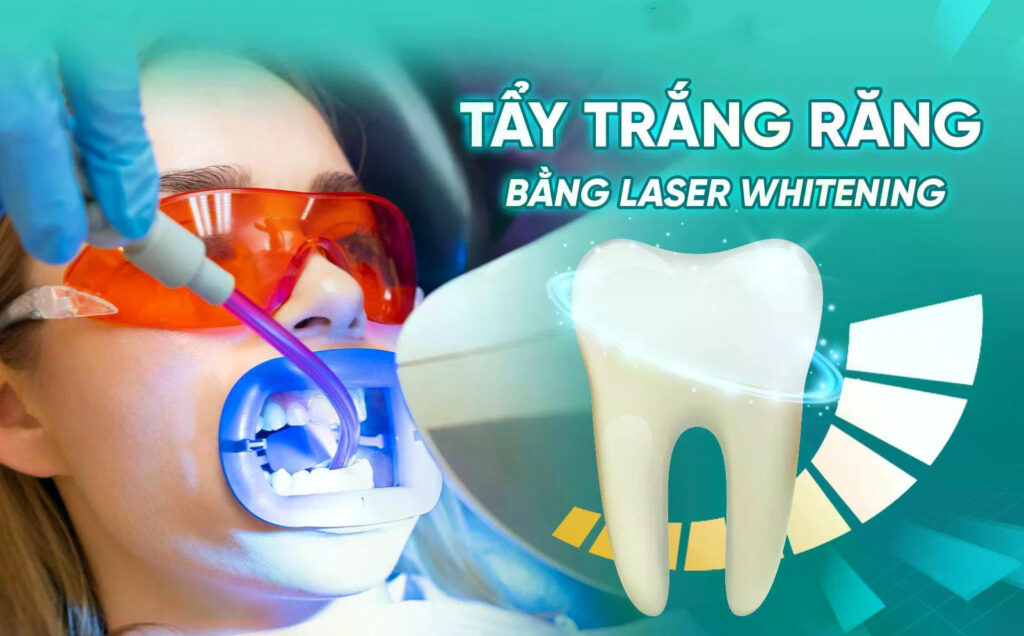
Teeth whitening procedure at the dental clinic
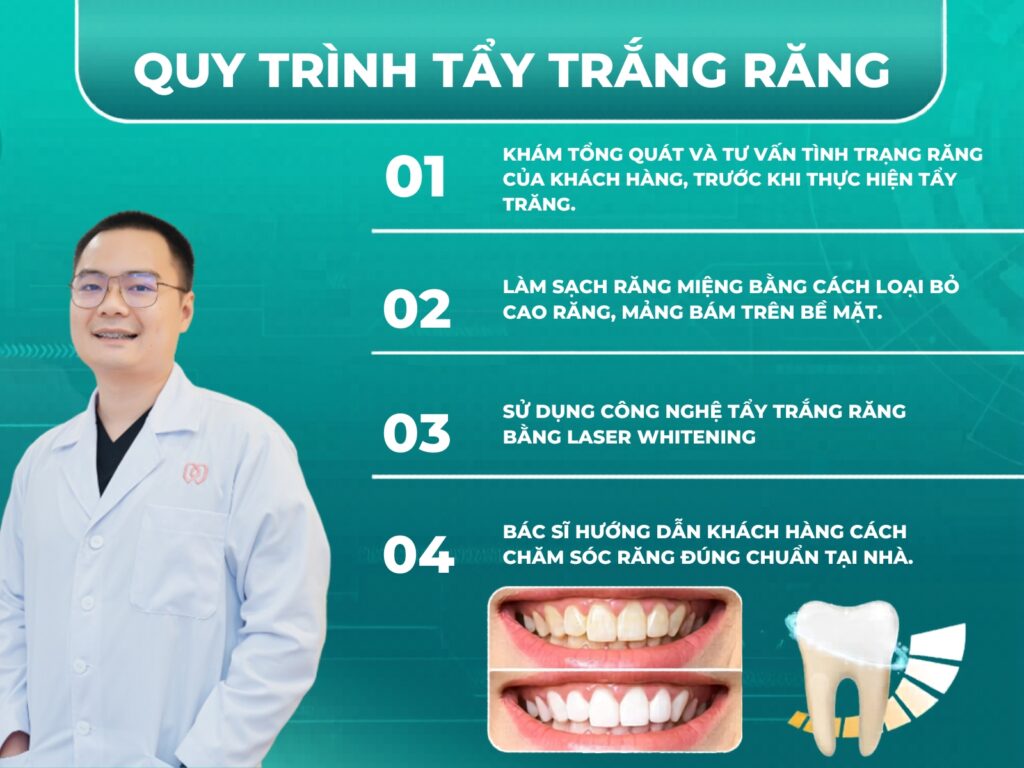
The teeth whitening process at MIA Dental Clinic using Laser Whitening technology is performed in the following four steps:
- Step 1: A general examination and consultation regarding the client’s dental condition before teeth whitening. If the client has certain dental problems such as gingivitis, periodontitis, or gum disease, the dentist will treat these conditions first and then whiten the teeth.
- Step 2: Clean your teeth and mouth by removing tartar and plaque from the surface. This helps enhance the effectiveness of the whitening agent.
- Step 3: Using Laser Whitening technology, a layer of whitening gel is applied in an appropriate amount, then the dentist uses a blue laser beam to shine directly onto the teeth that have been treated with the gel.
- Step 4: The dentist instructs the patient on proper dental care at home.
To enhance the effectiveness and longevity of teeth whitening after laser whitening, customers should pay attention to the following aftercare instructions:
- During the first two weeks, avoid consuming foods and drinks with strong colors such as coffee, tea, and soft drinks, then reduce the amount in subsequent weeks.
- Avoid consuming foods that are too cold or too hot to prevent sensitivity, as teeth may be more sensitive after whitening.
- Do not use any manual at-home teeth whitening methods for at least one month after undergoing laser teeth whitening.
- Use a toothbrush with soft bristles when brushing your teeth.
- Use mouthwash and dental floss to help clean away plaque from food particles.
- Use toothpastes that contain a high amount of fluoride to help strengthen your teeth.
Safety and effectiveness of teeth whitening
- Safety: Teeth whitening is completely safe when performed correctly at a reputable dental clinic by a qualified dentist using quality products.
- Does not harm tooth enamel or tooth structure: The nature of teeth whitening is to use oxidizing compounds and light energy to break down color molecules in the dentin, making teeth brighter without damaging or affecting the tooth surface or any other elements of the tooth. This is not an invasive method like porcelain veneers or dental implants, so it rarely causes complications. However, if performed at a low-quality dental clinic, it can lead to prolonged tooth and gum sensitivity, enamel erosion, gum damage, and uneven tooth color.
Note: Tooth sensitivity is the most common side effect and usually occurs after teeth whitening, especially in people with sensitive teeth. This symptom is usually mild and disappears after a few days (usually 1-2 days).
Complications that can occur after teeth whitening at low-quality dental clinics.
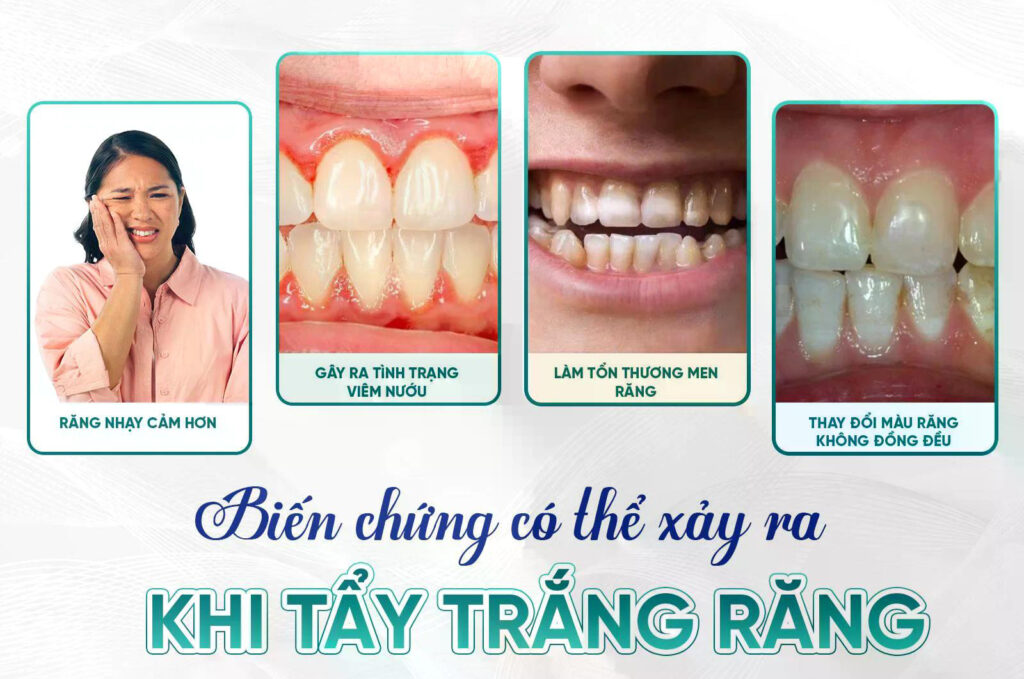
“Is teeth whitening harmful?” or “What complications can occur after teeth whitening?” are questions many people are concerned about. In reality, every teeth whitening method carries certain risks. Below are some possible complications that can occur when you whiten your teeth:
- Increased tooth sensitivity: Your teeth will become more sensitive after teeth whitening due to the high concentration of hydrogen peroxide in the whitening agent. Those who already have sensitive teeth may experience mild pain or soreness after whitening.
- Causes gingivitis: Improper teeth whitening can lead to gingivitis. This often happens with at-home whitening treatments due to incorrect techniques.
- Damage to tooth enamel: During the whitening process, if the dosage is not carefully controlled and excessive use of whitening agents is employed, it can cause erosion of the tooth enamel.
- Uneven tooth discoloration: Improper teeth whitening can also lead to uneven tooth color, most commonly seen when self-whitening with strips or manual methods.
As you can see, most complications after teeth whitening stem from incorrect methods and procedures when performed at home. Therefore, if you want to whiten your teeth safely, you should carefully research the procedure, be cautious at each step, and the best approach is to have professional teeth whitening done at a dental clinic for optimal care.
How much does teeth whitening cost?
The cost of teeth whitening ranges from approximately 2,500,000 VND, depending on many factors. For at-home whitening, the cost depends on the method, the number of sessions, and the materials used.
Alternatively, if you opt for professional teeth whitening at a dental clinic, each facility will have its own pricing structure for each service and whitening material. Below is a price list for teeth whitening at MIA Dental Clinic for your reference:
The above is just the basic price for teeth whitening. For each specific case, the doctor will base the exact price on the client’s dental condition. To find out the price for teeth whitening for your specific case, please contact MIA Dental Clinic at 032.688.8680.

Things to note when undergoing teeth whitening
Teeth whitening will yield the best results if clients thoroughly research the method, diet, and other aspects both before and after the procedure. Here are some things to keep in mind when getting your teeth whitened:
10.1. Notes before bleaching
- Carefully check the condition of your gums and teeth to determine if you are suitable and eligible for teeth whitening.
- Eliminate dental and gum problems: If you have problems such as gingivitis, cavities, periodontitis, etc., you need to treat them before proceeding with teeth whitening.
- Use the right whitening method: Not all teeth whitening methods are suitable for every situation. To achieve the best results, you need to discuss with your dentist to find a method that suits your individual oral health condition.
- Pay attention to your diet: You can also prevent and improve the condition of discolored teeth by changing your eating and lifestyle habits, limiting the consumption of foods and drinks with strong colors such as coffee, tea, alcohol, and carbonated drinks.
10.2. Notes after teeth whitening
For the period after teeth whitening, to maintain the white color for as long as possible, you need to pay attention to a few issues such as:
- Proper oral hygiene: You should use mouthwash and dental floss to remove plaque from your teeth after meals. In addition, you should brush your teeth at least twice a day with a soft-bristled toothbrush and toothpaste containing plenty of fluoride to strengthen your teeth.
- Gum care: You should maintain a habit of rinsing your mouth and avoid harsh actions to prevent damage to your gums.
- Follow your doctor’s dietary advice: For the first month after teeth whitening, you should eat soft, easy-to-swallow foods such as porridge, soup, and broth, and avoid colored foods like tea, wine, coffee, etc. You should also limit foods that are too hot or too cold to avoid tooth sensitivity. After one month, you can resume consuming these foods, but it’s best to limit your intake to prevent further discoloration.
- Regular check-ups: Maintain a routine of regular dental check-ups to ensure your teeth and gums are in optimal condition after whitening, and to allow your dentist to address any discoloration, staining, or uneven coloration promptly.